Run-of-the-mill booking software is usually built to manage time slots and schedules — what days and times people can book with you, how many people can book per time slot, those kinds of things.
But bike rentals are different. They’re time and equipment-based. Your customers aren’t just booking a rental window; they’re also booking a bike, helmet, and any other gear they need. So the booking software, in this case, needs to track your actual fleet, not just headcount.
That’s why resource management is the most important feature to look at when comparing booking systems.
So we put together this guide to walk through how ten platforms — starting with Bókun — manage rentals and the rest of what a bike rental shop actually needs day-to-day.
To learn more about Bókun after reading, start a 14-day free trial (no cc required).
1. Bókun
All-in-one bike rental management software to manage bookings, equipment, customers, & back-office operations
Bókun’s booking software is built for the activities space — rental companies, tour guides, attractions, and other travel experience pros. And for bike rental operators specifically, that means we’ve solved for both sides of the equation: the booking calendar and the equipment behind it. Our resource management module tracks your actual fleet — individual bikes, helmets, and any other gear you rent out — so your availability is always accurate and nothing gets double-booked.
Beyond resource management, we’ve designed our system as an all-in-one solution with modules to cover everything activity providers need to easily run their day-to-day operations. And we packed it with a ton of growth drivers to actually win you more bookings. You’re not just keeping things running smoothly; you’re actively reaching new audiences and keeping your calendars full.
We’re a Tripadvisor and Viator brand with over 10 years of industry experience, working with teams of all sizes from all corners of the globe. We’ve put everything we’ve learned during this time back into Bókun, constantly updating, adding new features and flexibility, so our system can support all our operators, exactly where and how they need it. From multi-location enterprises with teams across dozens of countries to small one- and two-person shops just getting their footing. And our team can help configure and adjust Bókun as you grow, even for the most complex setups.
Read more: How Bicycle Roma Tripled Revenue to $570K Through Multi-Location Management with Bókun
We’ve also kept pricing as operator-friendly as possible.Bókun comes with a 14-day free trial, with no credit card required, so you have time to test it out before making any decisions. We also have some of the lowest prices among competitors (a $49/month subscription fee and super-low 1.5% online booking fees). Built to drive real growth without eating your earnings.
In the next sections, we’ll show you exactly how Bókun works for bike shops, so you can get a sneak preview before starting the trial. When you’re ready to test it yourself, you can do so here.
Bókun’s resource management module
The core of how Bókun works for bike rental operators is our resource management module. Here’s how to set it up.
You start by building out your inventory in two layers: resource types (your categories) and resources (the individual items inside each category). For a bike rental shop, that might look like:
- Mountain bikes → Trek Marlin 7 #1, Trek Marlin 7 #2, Trek Marlin 7 #3…
- E-bikes → Specialized Turbo Como #1, Specialized Turbo Como #2…
- Kids’ bikes → 20″ kids’ bike #1, 20″ kids’ bike #2…
- Helmets → Helmet #1, Helmet #2, Helmet #3…
- Accessories → smart locks, handlebar phone mounts, lights, water bottle holders, and so on…
Each resource entry gets a name you’ll recognise (we’d suggest something like the model name plus a number so you can tell them apart on the calendar), and you can include capacity, any notes, and a serial number or SKU to make fleet tracking easier.
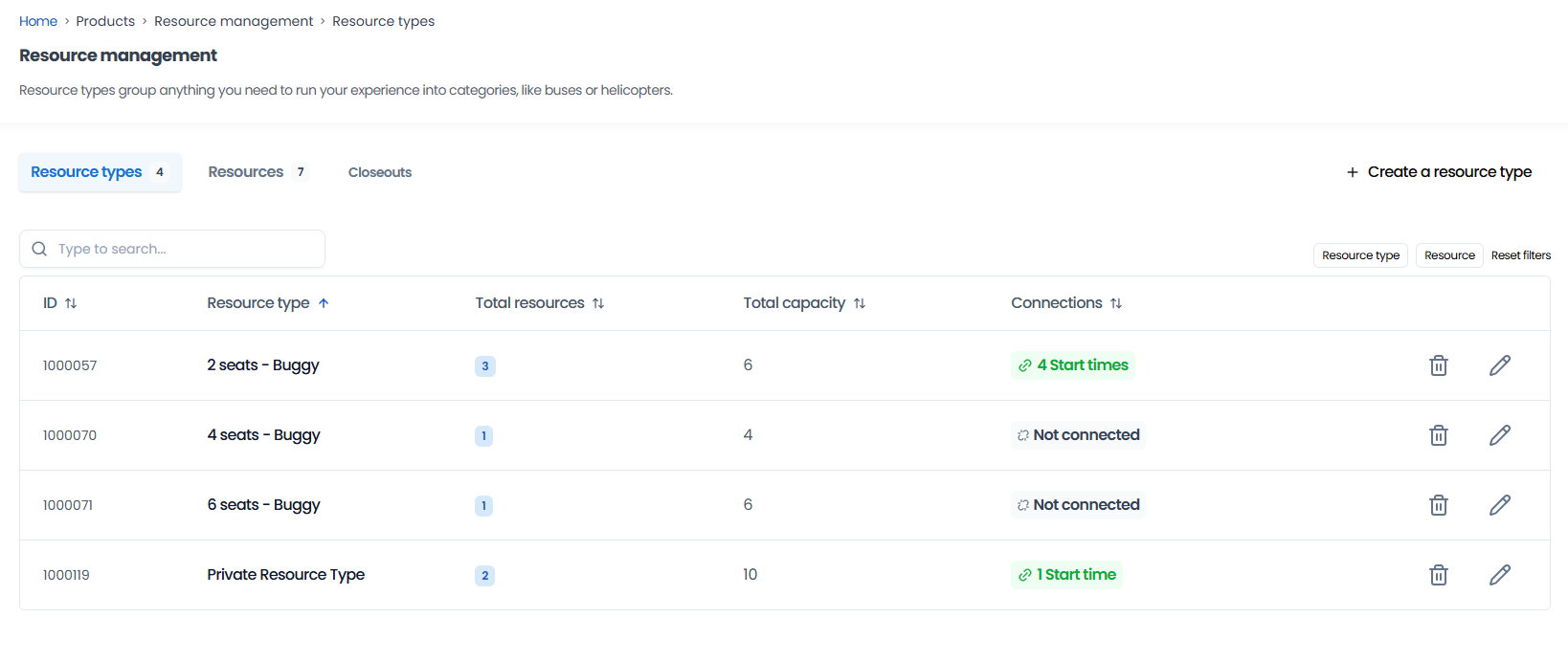
Once your inventory is built out, you link resource types to your listings and set an allocation rule for each. This is where it gets practical for how bike rentals actually work:
Your e-bike listing pulls exclusively from your e-bike resource type — so only e-bikes get assigned to e-bike reservations. The same logic applies to road bikes, mountain bikes, and any other category with its own distinct listing. The moment someone books a two-hour e-bike rental, one of your Specialized Turbo Comos gets locked to that booking. Nobody else can claim it for that window.
Helmets and accessories work differently — these typically come from a shared pool across all your listings, since a helmet is a helmet regardless of which bike a customer rents. You’d connect that helmet resource type to all relevant listings and let the allocation rules distribute from the pool automatically.
You also choose how you want the system to assign bikes to each booking — whether to rotate through your fleet evenly, work through bikes sequentially, or assign them manually yourself at pickup. Either way, the moment a booking is confirmed, that bike is locked to it and unavailable for any other reservation during that window.
Read more: Best booking systems with resource management
Experiences module to create rental listings & assign resources
The Experiences tab is where you create the rental products your customers will actually see and book. Each listing is simple: a rental window and a bike type. A 2-hour mountain bike rental, a 4-hour e-bike rental, a full-day cruiser rental — each one is its own listing with its own duration, pricing, and assigned resources.
You can build listings from scratch, import them from your existing website using our AI importer, or pull them in directly from Viator if you’re already listed there.
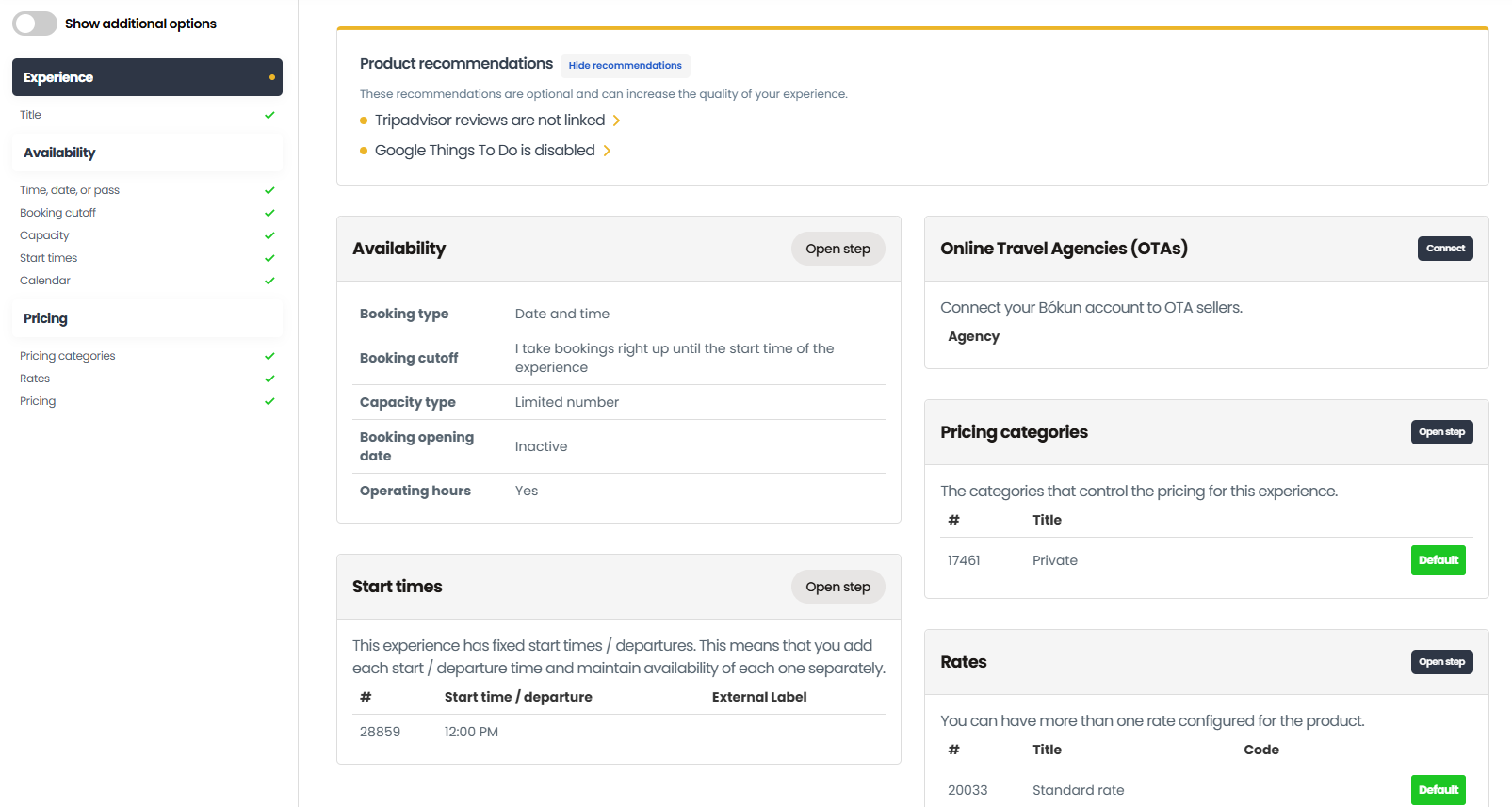
For each listing you’ll fill in:
- The details. The bike model, what kind of ride it’s suited for, where to go with it — local trails, scenic routes, typical terrain for the duration — and photos of your fleet and past rentals.
- What’s included and what’s an add-on. A helmet might be bundled by default or offered as an option. Same goes for locks, lights, handlebar phone mounts, and water bottles. You set the rules per listing.
- Availability. The days and times customers can book, group size limits, and any blackout dates for maintenance or seasonal closures.
- Pricing. Most operators run a flat rate per bike. You also have the option to offer bulk discounts for groups booking multiple bikes, and a dynamic pricing tool to adjust rates automatically based on rules you set — drop rates as a booking cutoff approaches if you still have bikes available, increase them during peak season, or offer discounts for longer rental windows.

Then you’ll link the required resources directly from the inventory you set up in the resource management module — and from there, assignment and availability blocking happen automatically.
The central calendar
The central calendar is where you manage everything once listings are live and resources are set up.
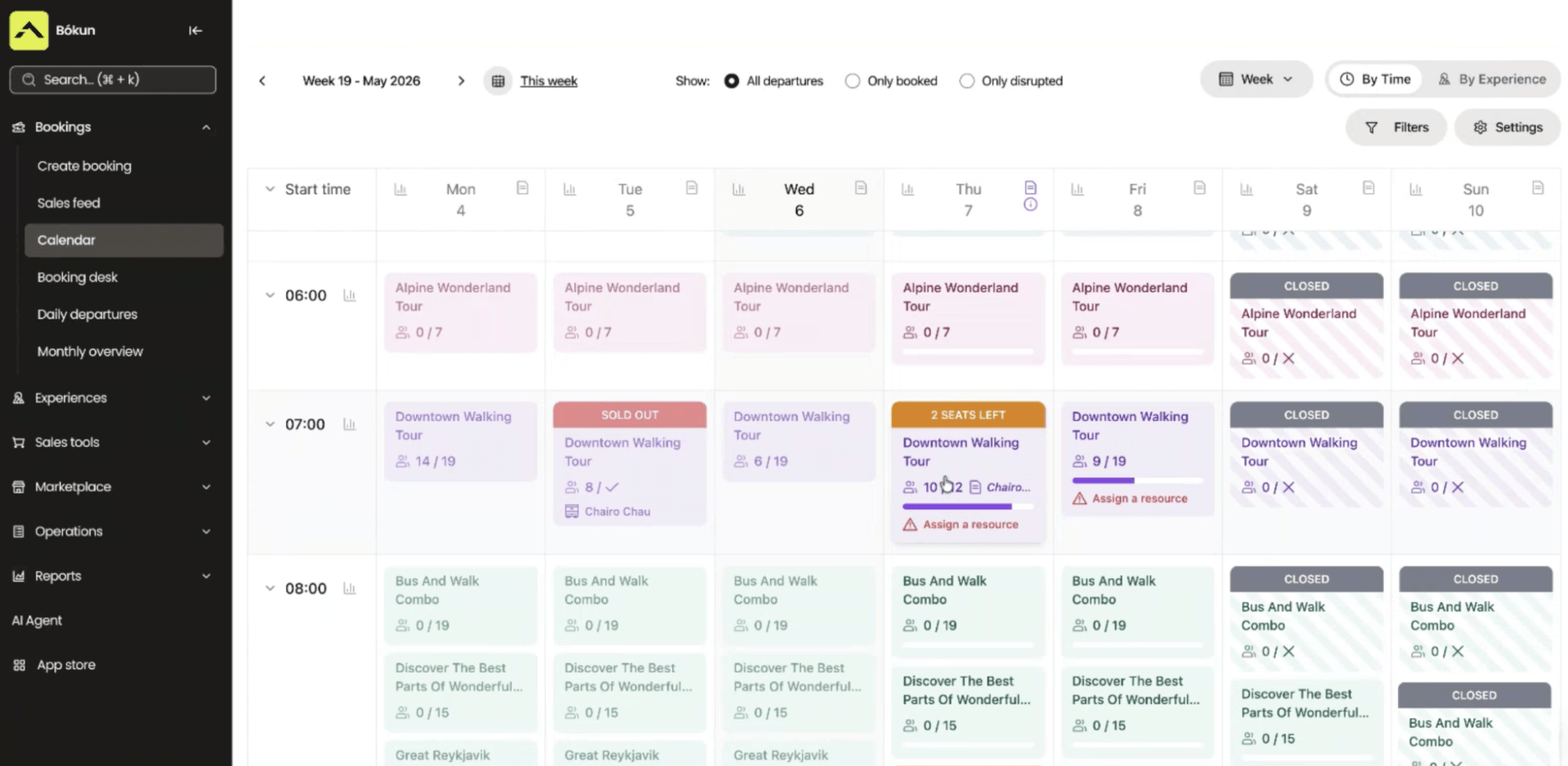
Every booking — made online through your website, OTAs, or partners you’re connected to, or added manually for walk-ins and phone reservations — comes into this one view. Click into any booking to see the full details: which bike is assigned, which accessories are going with it, the rental window, and customer info.
When a booking is confirmed, availability updates instantly across every connected channel. If your last available mountain bike for a 10 am slot gets booked through your website, that slot disappears on Viator and anywhere else you’re listed at the same moment — no manual syncing or risk of two customers showing up for the same bike.
You can also close out individual bikes directly from the calendar — for a repair, a maintenance check, or any reason a specific unit needs to come out of rotation — without touching availability for the rest of your fleet.
Bókun’s tools to sell bike rentals online & promote your business to new audiences
Website builders & booking engine widgets
Getting online bookings starts with making your site actually bookable. Bókun gives you everything you need to do that and see more direct bookings.
If you already have a website, you can embed our booking engine widgets wherever it makes sense — a “Book Now” button on your homepage, a calendar view on your rentals page, a product overview showing your full fleet with availability and pricing. The widgets are compatible with virtually all website builders — WordPress, Squarespace, Wix, Weebly, and more.
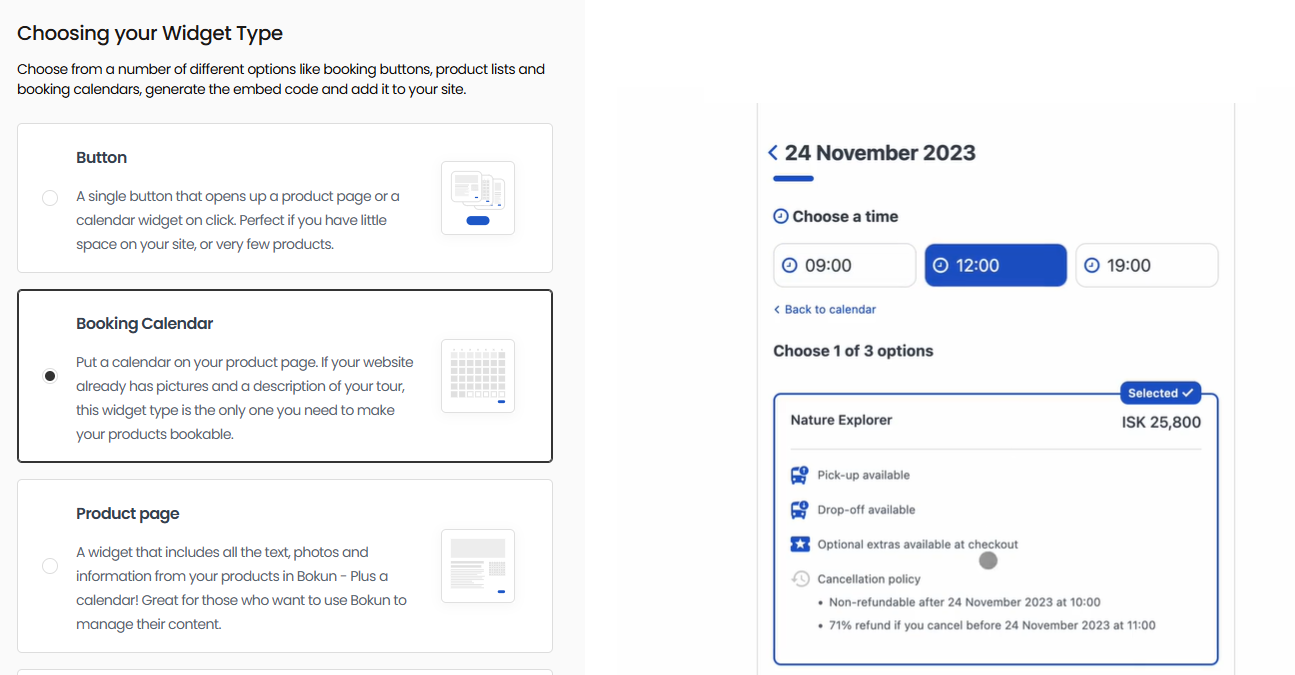
Read more: How to add a booking system to your website
If you don’t have a site yet, our one-click website builder gets you online fast. No developer needed — pick a template, add your branding, business info, and photos, and then hit publish. The site comes bookable right out of the box.
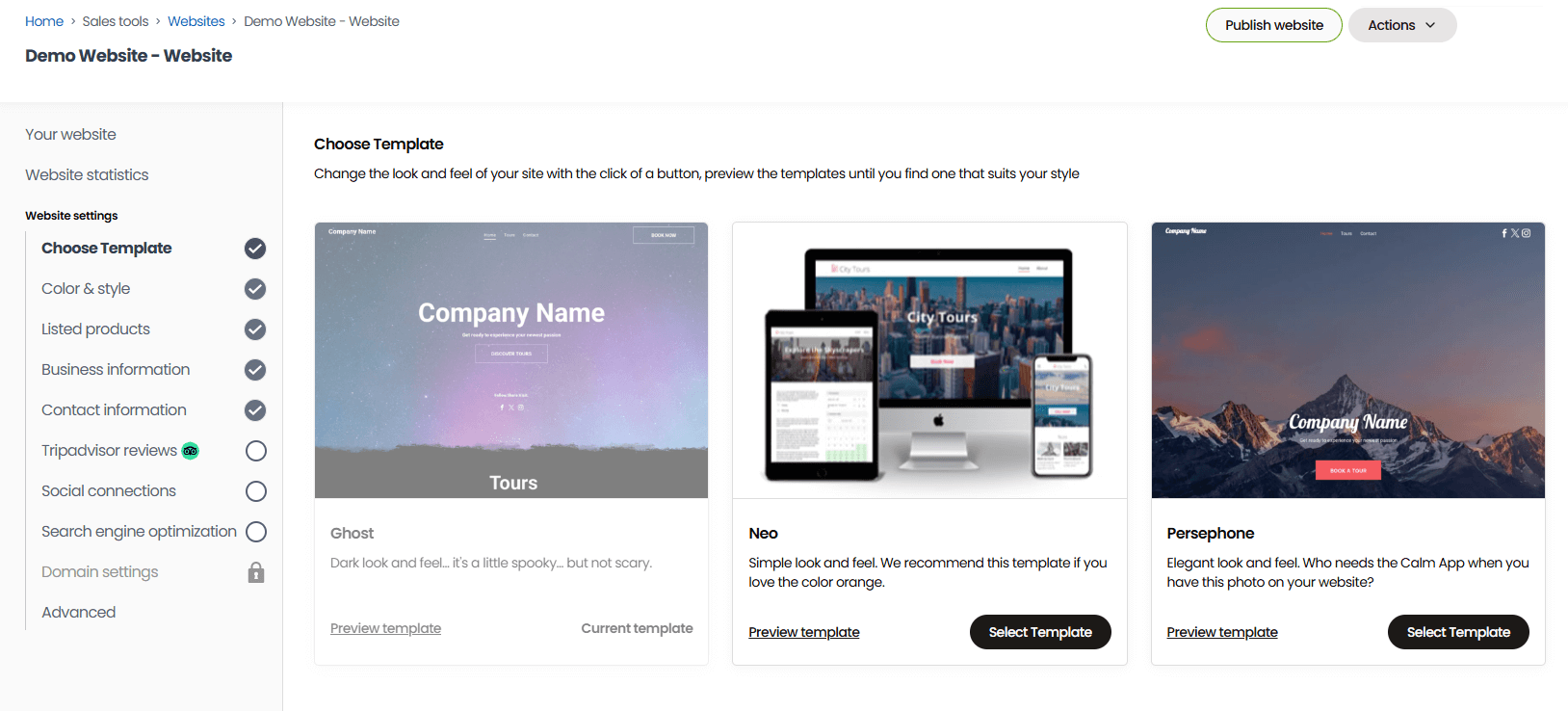
Both routes give your customers a mobile-friendly checkout, so whether someone’s planning ahead from a laptop or browsing for a rental on their phone while they’re already in town, the booking process is easy. And since it’s live 24/7, you’re capturing reservations outside business hours without anyone on staff to take them.
We also integrate with a wide range of payment processors — Stripe, PayPal, Apple Pay, Google Pay, Klarna, Venmo, and more — so customers can pay however they prefer.
Read more:
- How Railbiking in Greece doubled their bookings within a year with Bókun
- How REDRIB Experiences grew from a startup to a 5-star company with 89% direct online bookings
- How Urban Saunters switched booking platforms overnight and tripled direct bookings in 6 months
- How one diving operator saw a 40% surge in bookings with Bókun
- How Sailing Windermere achieved business growth by accepting online bookings 24/7
Connections with OTAs & online marketplaces
Your website reaches people who already know you exist. OTA connections are how you get in front of everyone else — the visitors and day-trippers searching for things to do in your area who haven’t heard of your shop.
Bókun connects to 70+ global OTAs and online marketplaces from one dashboard — Viator, GetYourGuide, Airbnb Experiences, Google Things to Do, Expedia, Civitatis, Klook, Headout, and dozens more. We’re the #1 restech partner across major sites, and hold premium partnerships with three of the biggest:
- Our Viator Preferred Partnership lets us offer 0% Bókun fees on every Viator booking, plus free annual subscription credits (12, 24, or 48 per year, depending on your plan).
- The GetYourGuide Premium Connectivity Partnership guarantees best-in-class API performance, so availability and bookings sync fast and reliably between platforms.
- And as an official Google Things to Do partner, our users can get their rentals and experiences listed directly on Google Search and Maps, bypassing the standard application process.
Most platforms on this list have no OTA connections at all. If reaching travellers who start their search on a booking marketplace is part of how you want to grow, Bókun is one of the only options here that makes it possible.
We also put together these guides so you can learn more about how to start selling across these sites:
- How to sell tours on Viator
- How to add your business to Tripadvisor
- How to become a GetYourGuide supplier
- How to get listed on Google Things to do
- How to become a Civitatis supplier
- How to host experiences on Airbnb
- How to become a TourRadar supplier
- How to sell tours on Expedia
- How to become a Musement supplier
- How to become a Klook supplier
- How to become a Headout supplier
You can also see how Cycle the City leveraged Bókun to connect with OTAs and sell to global audiences in their case study here.
Bókun Marketplace
Beyond OTAs, Bókun has one of the largest reseller networks in the industry — the Bókun Marketplace — with thousands of travel industry businesses you can partner with directly. Tour guides, travel agents, DMCs, accommodation providers like hotels and resorts, transportation services, attractions, educational institutions, and more. You can search here by supplier or product type to easily find complementary partners.
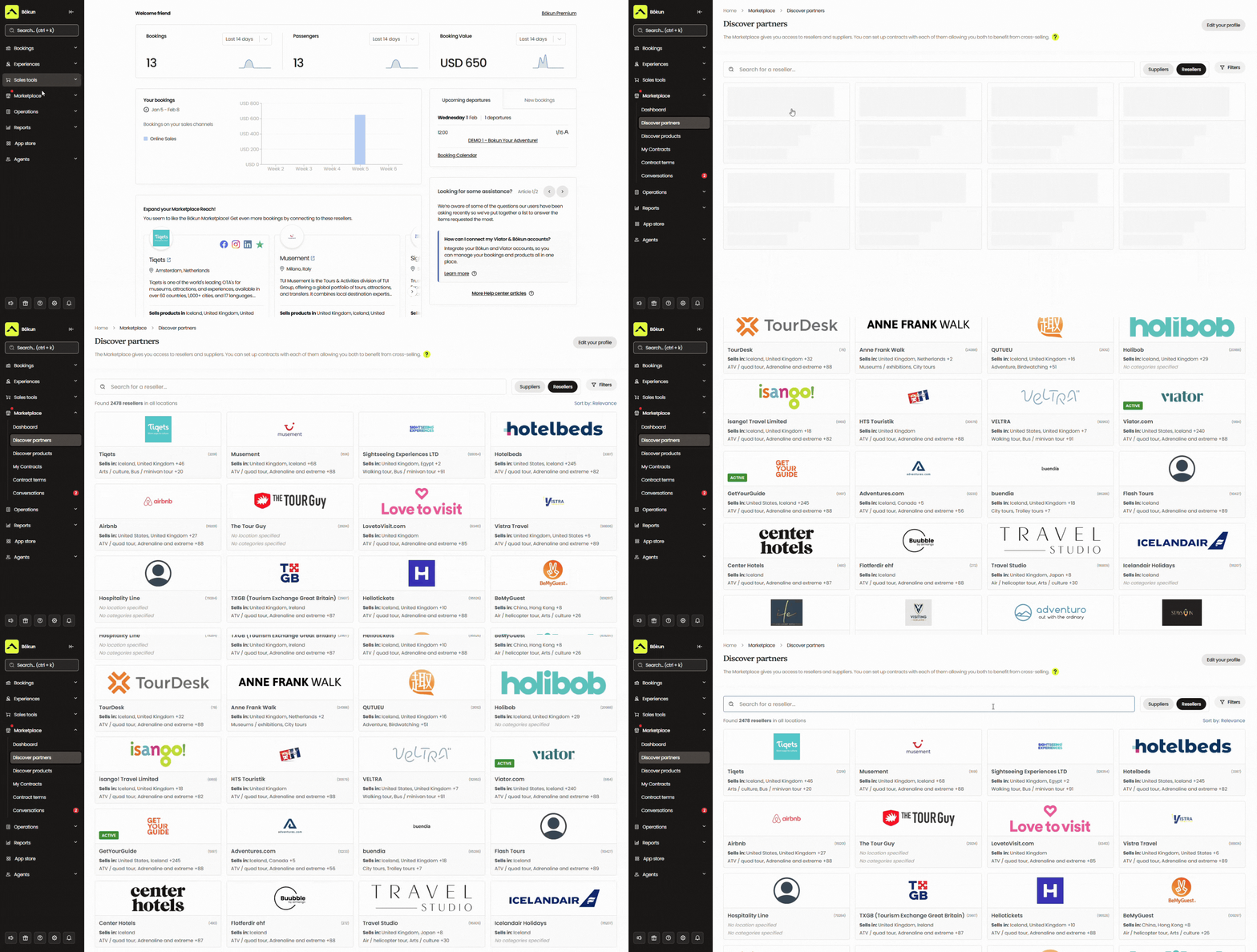
For bike rental operators, the most valuable connections tend to be local: hotels and vacation properties whose guests want to explore the area on two wheels, travel agents building day itineraries, tour operators looking to round out their offering with a rental option. You earn bookings through their audiences without spending anything to acquire those customers yourself.
The network runs both ways, too. You can resell other operators’ experiences or services and earn a commission on each booking — a way to add revenue without adding more to your schedule.
And with Bókun’s combo experiences, you can create packages that bundle your rentals with other businesses’ offerings — pair a half-day bike rental with a guided trail tour, or team up with a nearby accommodation provider on a stay-and-ride package.
We provide all the tools to set your partnership terms, reach out to other businesses, and manage all those relationships, and there’s no cap on how many partners you can work with.
See how other operators see more bookings from the Bókun network in our case studies below:
- International Friends generates $500K in sales via Bókun Marketplace
- Mega Zipline Iceland leverages 100+ reseller contracts to scale business to new heights
- Venice Tours achieved a 400% revenue increase through the Bókun Marketplace
- Tour Marbella pulls 54% of its bookings through Bókun Marketplace connections
- Simba Sea Trips sees consistent 20% year-on-year revenue growth after joining Bókun
Bókun Referral Tracking
Referral Tracking lets you build an affiliate network with anyone outside of the Marketplace — local businesses, content creators, community organisations, whoever has an audience that overlaps with yours.
For a bike rental shop, that could be trail associations and cycling clubs, nearby hotels and hostels, outdoor gear shops, tourism boards, cycling bloggers and YouTube creators, or campgrounds whose guests are already looking for ways to get on two wheels.
Each affiliate gets either a trackable booking link to share in their content or emails, or a dedicated booking hub they can embed directly on their own site. Commission rates are yours to set and negotiate — Bókun doesn’t dictate them. And since every booking is attributed to the source it came from, you can see exactly which partners are pulling their weight and put more focus there.
Bókun’s customer management tools
CRM with automated communications
Bókun includes an in-built CRM, so you don’t have to manage customer data in a separate system. Every time someone starts the booking process, their details are captured automatically — name, contact info, rental history, any add-ons they’ve purchased — and saved to a searchable customer database.
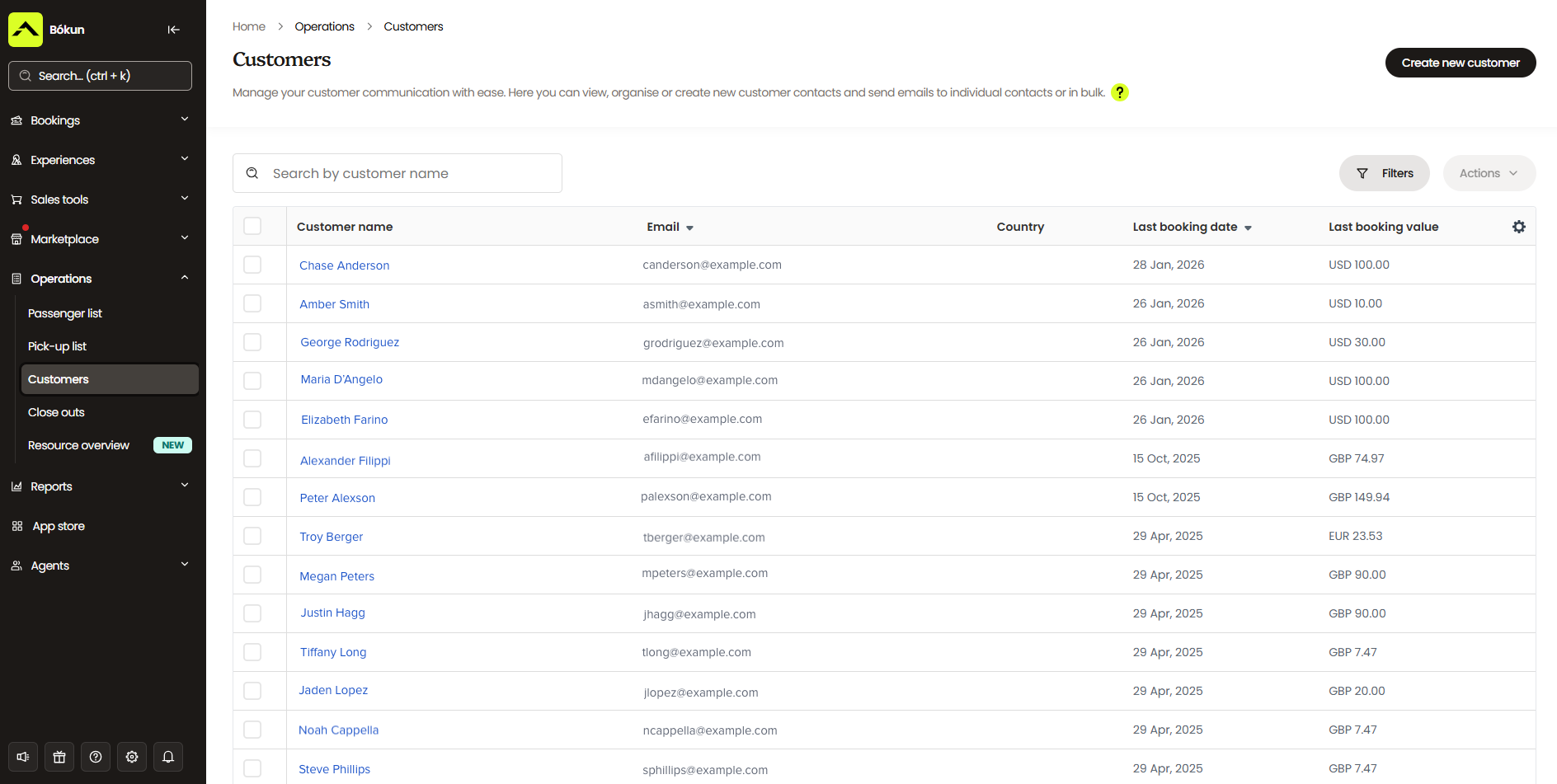
That history is useful beyond just record-keeping. You can see patterns in who’s booking with you. Mostly tourists on day trips, or locals who come back regularly? Families renting multiple bikes at once, or solo riders? That kind of picture helps you think about your product mix, your pricing, and where to focus your marketing.
The CRM pairs directly with our automated communications tool, which handles all the standard customer touchpoints without anyone on your team doing it manually:
- Booking confirmations with a mobile ticket attached, sent the moment a reservation is made.
- Pre-rental reminders — a day before, the morning of, or both — with anything useful for the customer: where to meet, what to bring, what to expect.
- Post-rental follow-ups for review requests or return-visit promotions.
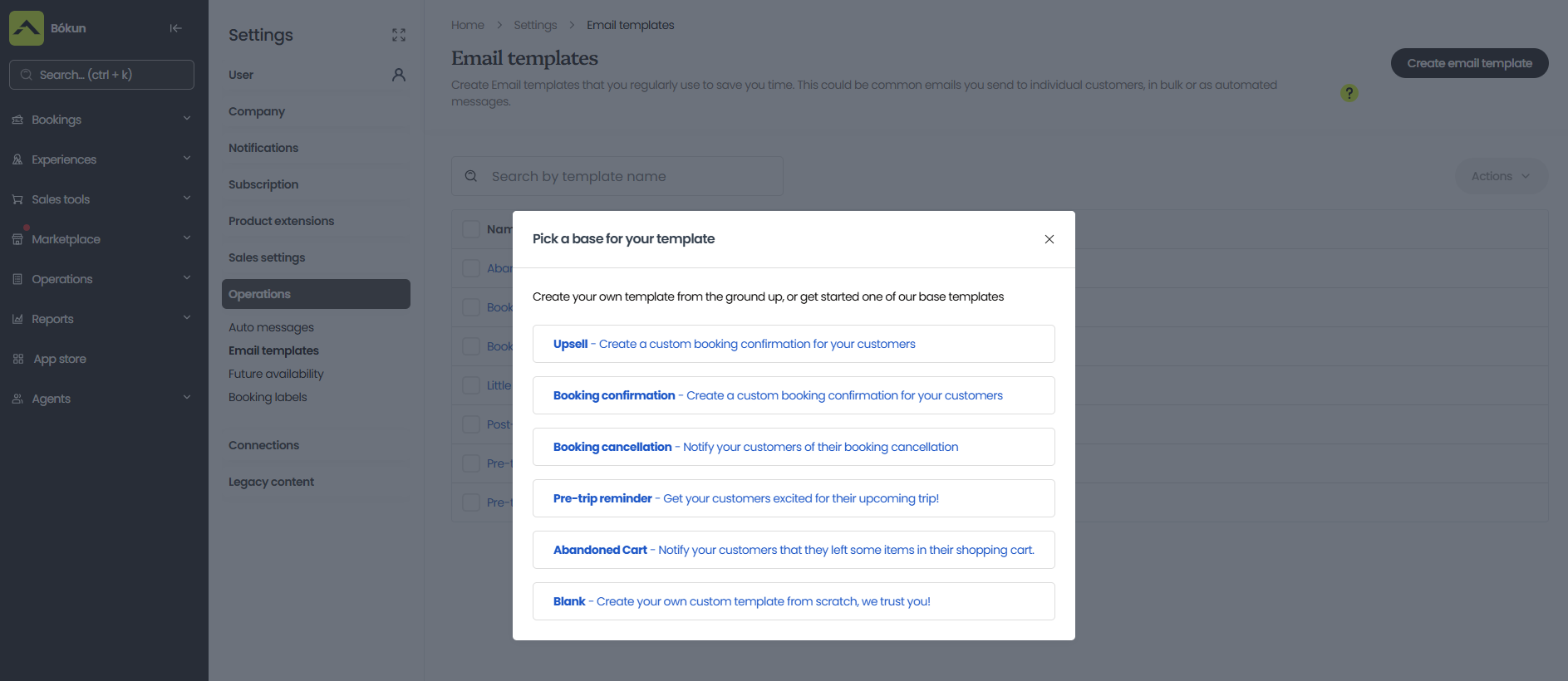
You also get a gallery of email templates for abandoned cart recovery, discount codes, newsletters, seasonal campaigns, and other marketing initiatives you want to run through Bókun.
Self-service portals for customers
Bókun gives every customer a self-service portal — accessible straight from their booking confirmation email — where they can view their upcoming rental, reschedule, cancel, or add on accessories without calling in or emailing for help. Easier for the customer, less admin work for your team.
Check-in tools
On the day of the rental, Bókun’s mobile apps give your staff everything they need to move customers through pickup quickly.
Each customer’s booking includes a mobile ticket with a QR code or barcode attached — sent automatically when they book and saved to their phone. When they arrive, your staff easily scan the ticket, confirm the booking details, and get customers geared up. No more manually checking names off a list or hunting through a spreadsheet to see which bike is assigned to which customer.
The apps work offline too, so a spotty WiFi connection at the counter doesn’t create a backlog during a busy morning rush.
Bókun reporting dashboard
Bókun’s reporting dashboard tracks bookings and revenue by product, sales channel, and time period, giving you a clear picture of what’s driving your business and what isn’t.
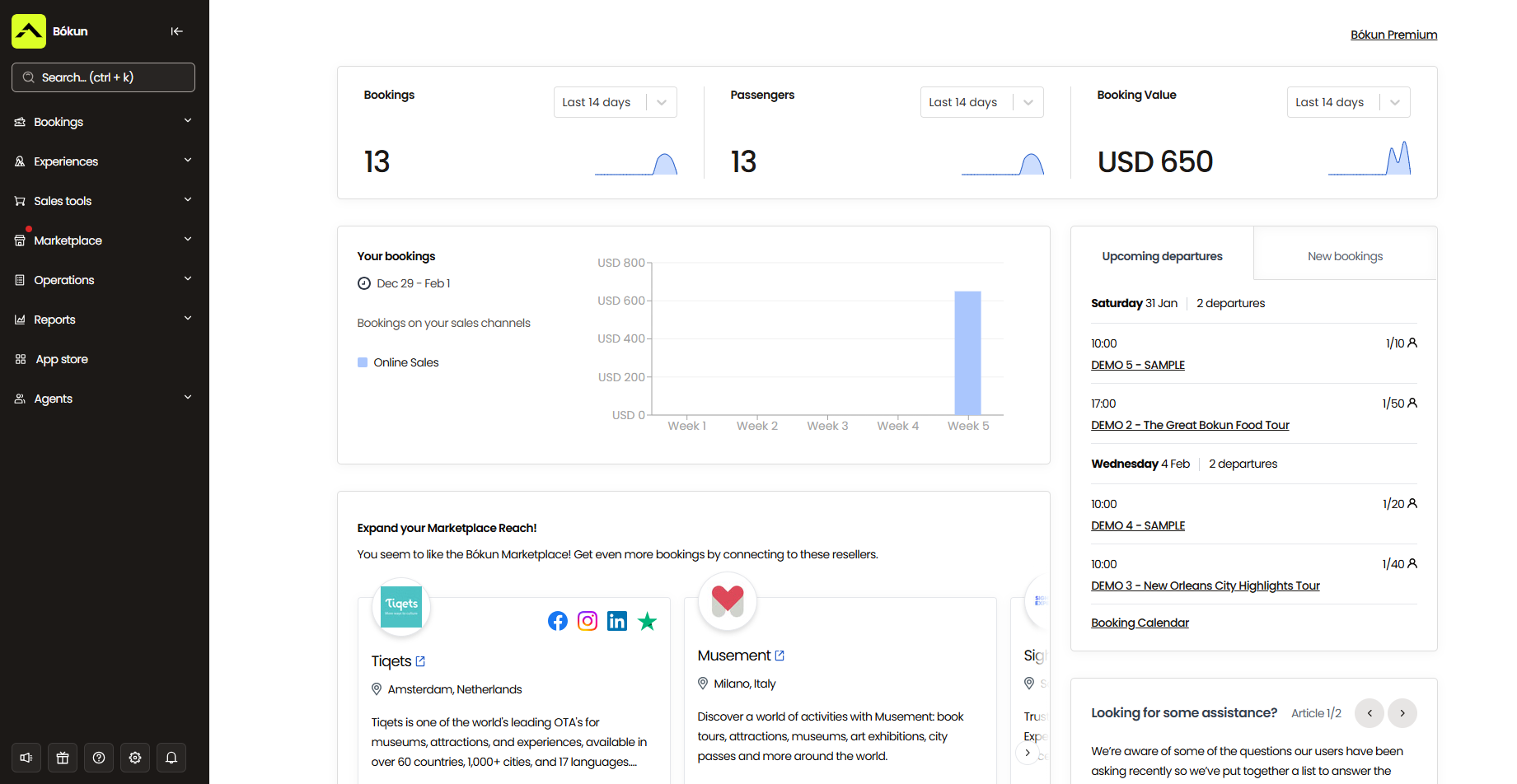
For bike rental companies, we suggest focusing on:
- Which bike types and rental durations book most. If e-bikes consistently sell out while road bikes sit idle, that shapes your next equipment investment. If 2-hour rentals are your bread and butter but full-day rentals rarely move, you have the data to make a call on how much inventory to hold for them.
- Which channels send you the most business. Whether your bookings skew toward direct website traffic, an online marketplace like Viator, or a Marketplace partner — and which sources aren’t doing as much. Then you can push more rentals and availability to the sites that are actually bringing you new bookings.
- Which add-ons sell. If customers consistently add phone mounts or bike lights, that’s useful for both inventory planning and how you position add-ons at checkout.
- When your busy periods fall. Peak weekends, high summer, school holiday spikes — so you can staff up ahead of them, tighten pricing during high-demand stretches, and run promotions to fill the quieter windows before they arrive.
For deeper analysis beyond the standard dashboard, our App Store includes an advanced reporting module with custom report building and more granular data cuts.
App Store
Bókun’s core features cover everything discussed above. The App Store is where you layer in additional modules based on what your operation actually needs — you pick what fits and skip what doesn’t.
For bike rental operators, the add-ons worth knowing about:
- Digital waivers. If you require customers to sign a liability waiver before taking out a bike — which most rental shops do — this lets them sign online before they arrive, directly from their phone. It’s already on file and attached to their booking by the time they show up, so pickup moves faster, and there’s no paperwork bottleneck when multiple customers arrive at once.
- SMS messaging. Useful for day-of communication — sending a quick reminder about pickup location, notifying a customer their bike is ready, or flagging a last-minute change.
- Tip management. Lets customers tip your staff directly from their phone after the rental — no cash required.
Slack notifications, Google Calendar sync, and Zapier are also available to connect Bókun to any other system you use every day.
Bókun’s packages & how to get started
You can get started with Bókun with a 14-day free trial — no credit card required. You’ll have full access to test the platform, build out your listings, and connect with Viator before committing to anything.
After the trial, our START plan gives you everything covered in this guide for $49/month with 1.5% online booking fees. Viator bookings carry 0% Bókun fees, and offline reservations are always free. There are no caps on bookings, users, or sales channels — you can grow as much as your business does without having to upgrade.
For teams with more complex requirements, we offer PLUS and PREMIUM enterprise plans. These unlock additional tools — agent portals, subvendor management, resource allocations, and Zapier — along with dedicated onboarding, priority support, and a yearly strategy call with Bókun’s team.
Ready to see how Bókun works for your bike rental business? Start your free 14-day trial here.
2. FareHarbor
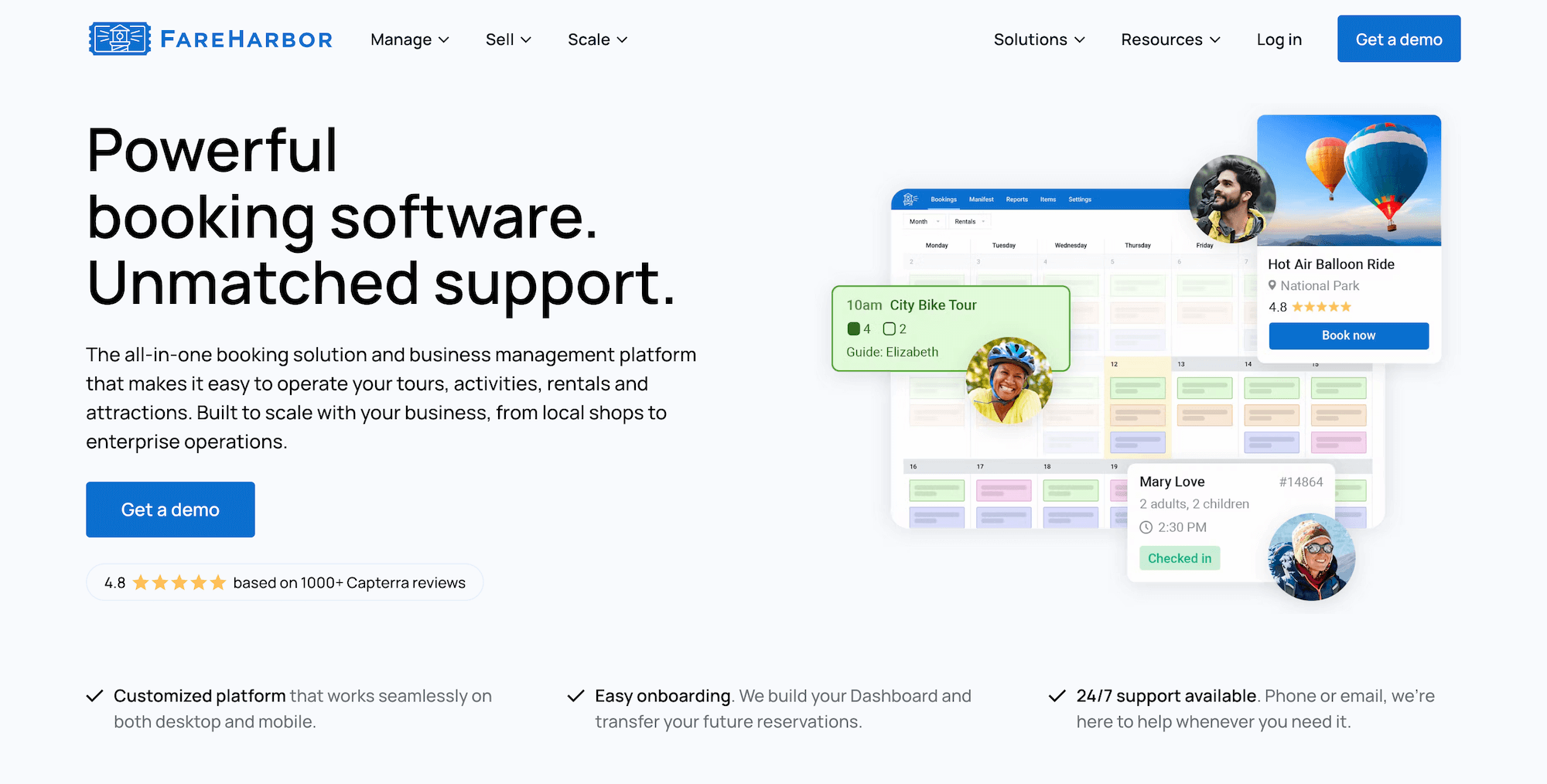
FareHarbor is a Booking.com brand and one of the most widely used booking platforms in the tour and activity space, and it’s a name many bike rental operators will already know.
Its inventory tools let you set capacities, track equipment availability, and build separate pricing options for different rental types. It has a solid central calendar, OTA connections, and an in-built distribution network for reseller partnerships.
But for a bike rental operator, the main thing to grapple with is cost. Their website-building service runs $5k/year (or $499/month), SEO services add another $2.2k to $5k annually, and any booking earned through their reseller network carries a 20% to 25% commission cut.
On top of that, FareHarbor charges some of the highest booking fees of up to 6%–8%. The system passes those fees directly to customers at checkout, so they don’t eat into your margins, but many operators say the steep fees deter customers at checkout and cost them bookings.
Read more FareHarbor reviews here.
Features
- Website-building services (and online booking widgets for existing sites)
- Centralised booking calendar to manage online & offline bookings
- Channel management
- Distribution network — including connections with OTAs and partners
- Inventory management — to create product listings, track equipment and staff availability, set tour capacities, and create tickets and pricing options
- Staff management, to manage staff schedules and assign guides to tours
- Native POS
- Integrations with online payment providers
- Customer portals to cancel or modify reservations
- Flexible check-in features & online waiver solutions
- Options to sell memberships
- Reporting
- Mobile apps
Pricing
FareHarbor charges booking fees of up to 6% and 8%. They also charge:
- $5k per year (or $499/month) for their website-building service
- $2.2k or $5k per year (depending on your package) for SEO services
- 20% to 25% commission from every booking you earn through the reseller network
Read more:
3. The FlyBook
The FlyBook has been around since 2006 and is built for operators running more than just timeslot-based bookings — businesses that do both guided experiences and equipment rentals from the same dashboard.
Its rental management module lets you list equipment and sell reservations online, while staff and resource management handles guides and gear simultaneously. For a bike rental shop that also runs guided rides or tours, it’s one of the few platforms on this list that handles both workflows natively.
But it’s worth noting that The FlyBook is mostly built for complex, multi-offering operations —adventure parks and resorts bundling lodging, tours, and rentals together. For a shop running a more straightforward rental operation, it’s likely more platform than you need. And the pricing reflects that. The FlyBook offers custom quotes, and most say it falls on the expensive side.
Read more FlyBook reviews here.
Features
- Online booking widget
- Customisable booking calendar with real-time availability.
- Reservation management tools, with features to connect with OTAs, partner with travel agents, and support group sales.
- Rental management, with tools to list rental equipment and sell reservations online.
- Staff and resource management
- Marketing tools to automate customer communications, sell gift cards and vouchers, and offer promo codes and bundle deals.
- Smartwaivers
- Kiosk mode, where customers can book reservations and sign waivers on the fly.
- Payment management tools
- Rain checks
- Land use reporting tools
- Integrations
- Reporting & back-office tools
- Mobile apps
Pricing
The Flybook doesn’t disclose pricing online. You must schedule a demo to receive a custom quote.
4. Bike Reservations Manager (BRM)
Bike Reservations Manager (BRM) is built specifically for bike rental companies, as the name suggests.
The platform goes deeper into fleet operations than anything else on this list: individual bike tracking, a full repair and maintenance module with service checklists, real-time usage monitoring, and a complete service history for each bike.
Then you’ve got barcode scanning that handles fast check-in and check-out, kiosk mode that supports self-service, and bike fit appointment booking and delivery scheduling for drop-offs and pickups. All tools that came from a team that understands how a bike rental shop actually runs day to day.
The tradeoff is that BRM’s strength is firmly on the operations side. There are no OTA connections or growth drivers to help you win new bookings. If distribution tools are a priority for you to fuel growth, BRM won’t support you there.
Pricing is also structured differently from most — it’s annual and tiered by inventory size and revenue rather than a flat monthly rate, so costs rise as your fleet grows. Add-ons for repairs, bike fittings, multi-location management, and others layer on top of the base plan.
Read more Bike Reservations Manager reviews here.
Features
- Online booking widget
- Real-time booking calendar across online and in-store, avoiding double-bookings
- Bike-level inventory tracking across your whole fleet
- Repair & maintenance module, with service checklists, real-time usage tracking, & full service history per bike
- Bike fit appointment booking
- Barcode scanning for fast check-in & check-out
- POS for in-store & online payments
- Digital waivers with e-signatures
- Kiosk mode for self-service check-in
- Delivery scheduling for drop-offs & pickups
- Multi-location management
- Lightspeed POS integration
Pricing
Bike Reservations Manager offers four plans. You choose based on your inventory size and annual revenue.
- The Bronze plan ($859/year) supports 50 items and $38k in annual revenue.
- The Silver plan ($1299/year) supports 100 items and $70k in annual revenue.
- The Gold plan ($2199/year) supports 250 items and $150k in annual revenue. This plan also comes with one free add-on.
- The Platinum plan ($3769/year) supports 250+ items and $305k in annual revenue. This plan includes two free add-ons.
You can also purchase add-ons to manage repairs, bike fittings, tours and events, deliveries, multiple locations with shared or split fleets, and bike allocations.
5. Valet
Valet is purpose-built for outdoor rental businesses — bikes, skis, scooters, and tours — and keeps things pretty simple.
The standout feature for bike rental operators is QR-code fleet tracking: each bike gets a code you scan at pickup and return, giving you a full history per unit with accessories tracked alongside. Then maintenance scheduling, damage flagging at check-in, and ride-count-triggered service alerts round out the fleet operations side.
However, like BRM above, Valet doesn’t offer any growth drivers, so winning bookings outside of your own website stays entirely in your own hands.
And pricing is worth some careful consideration here. Valet doesn’t charge any subscription fees, which, yes, keeps costs low during off-seasons. However, its high booking fee (5%) can add up during peak season. You’ll need to think about your booking volume and how these fees will affect your total earnings before committing.
Valet is also newer to the market with a limited track record of third-party reviews.
Features
- Online booking with real-time availability, mobile-friendly checkout
- Central booking calendar across online, walk-in, & kiosk bookings
- QR-code fleet tracking — assign bikes at pickup, scan at return, full history per bike
- Accessory tracking for helmets, locks, & other add-ons alongside bikes
- Maintenance scheduling, damage flagging at check-in, & ride-count-triggered service alerts
- Self-checkout kiosk mode
- Digital waivers tied to each booking, signed online or at check-in
- Payment processing via Stripe
- Booking edit tools for date, bike, & contact changes
- Multi-location support
- Reporting
Pricing
Valet charges a 5% booking fee.
6. Rentrax
Rentrax was built by people who came from the rental business. The founders started as a bike and ski rental company, couldn’t find software that worked for how they operated, and built their own.
That origin shows up in the details: inventory monitoring tracks mileage, battery level, and wear by item; maintenance scheduling runs on automated reminders; group bookings support multiple riders under a single order; and RFID integration supports fast fleet tracking in high-volume operations.
Reviewers note pricing flexibility as a strength. You can set rates by product category, switch between seasonal pricing structures, and manage promotions with custom discount codes.
But the consistent complaint in reviews is setup time. Getting Rentrax fully configured for your operation takes a lot of work —a busy shop in peak season probably doesn’t have a lot of runway for a lengthy onboarding process.
And, like BRM and Valet above (and many other platforms later on this list), there are no OTA connections. Its primary focus is operational efficiency; it doesn’t do anything to expand your booking channels.
Read more Rentrax reviews here.
Features
- Multiple order forms — online, walk-in, phone, & backend booking
- Availability calendar across time slots & locations
- Inventory & usage monitoring — track mileage, battery level, & wear by item
- Maintenance & service scheduling with automated reminders
- Bundle & package tools for bikes with accessories
- E-waivers & digital signatures
- Group booking support for multiple riders under one order
- Mobile app for bookings, inventory, & check-ins
- Multi-location dashboard
- Staff roles & permissions
- RFID integration
- Reporting
Pricing
Rentrax offers four plans based on transaction volume and monthly revenue.
- The Starter plan ($29/month) supports 30 transactions and $10k in monthly revenue.
- The Growth plan ($169/month) supports 250 transactions and $30k in monthly revenue.
- The Advanced plan ($449/month) supports 1k transactions and $100k in monthly revenue.
- The Premium plan ($999/month) supports 3k transactions and has no revenue limit.
7. Indexic
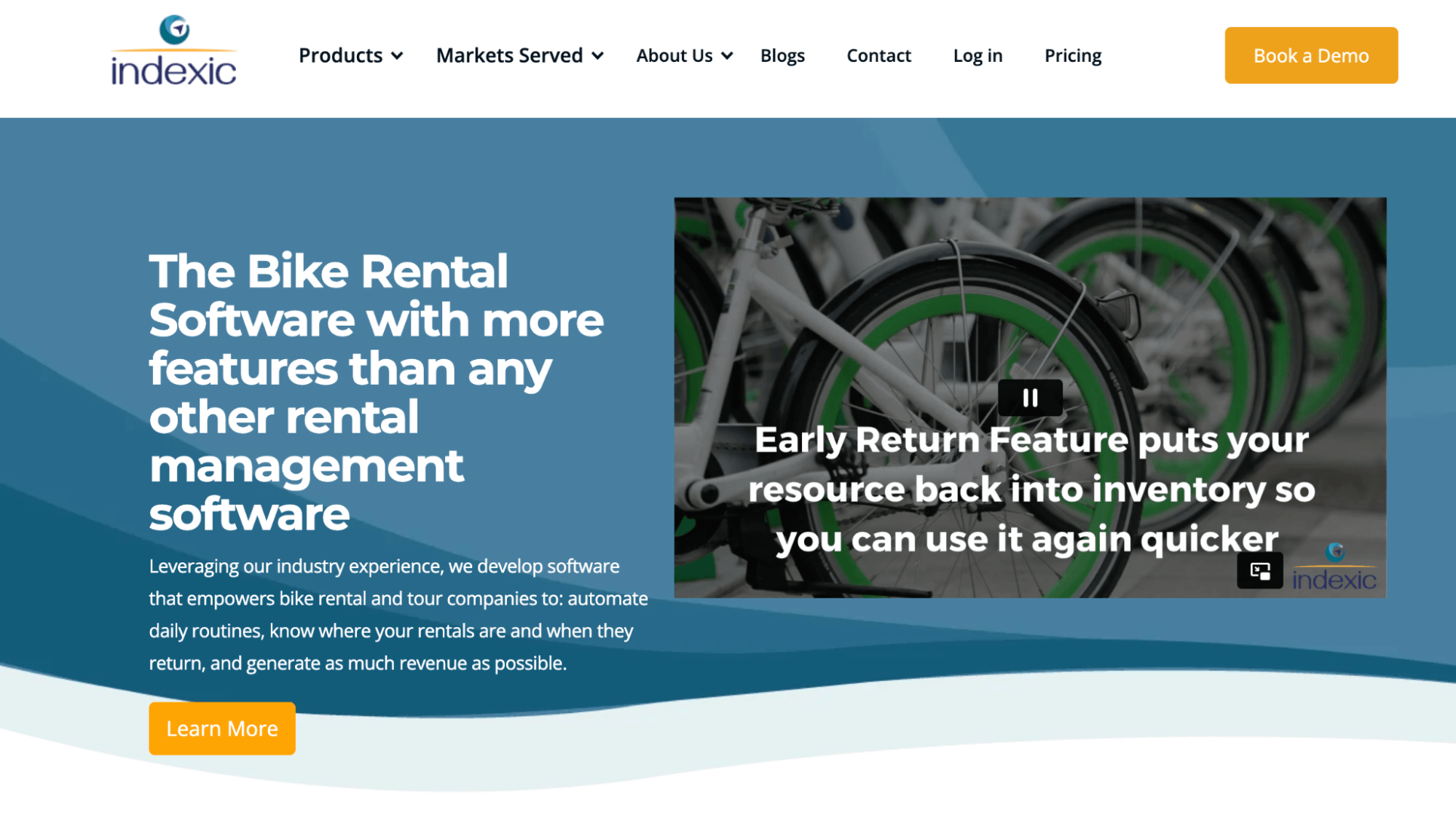
Indexic’s Reservation platform is built for both tour operators and rental businesses, and it manages both workflows from a single system — tour scheduling, guide assignments, and group management alongside individual bike reservations.
A few features stand out specifically for rental operators: geofencing to keep bookings within your service area, early-return auto-monitoring, and rental image capture. The platform also partners with national insurance carriers to underwrite renters’ insurance, which you won’t find on most platforms in this guide.
And it has growth drivers like OTA connections, so you have options to sell beyond your website here.
Pricing requires a demo, so there’s no way to compare costs upfront. The one figure that is visible: their digital waiver solution is 15¢ per signature, with a $30/year minimum.
Find Indexic Reservation reviews here.
Features
- Online booking engine widgets
- Integrated point of sale (POS)
- Centralised booking calendar
- Resource management
- Early return auto monitoring
- Rental image captures
- Combo products
- Dynamic pricing
- Integrated digital waiver solution
- Partnerships with national insurance carriers to underwrite renters’ insurance
- Automated communications
- Abandoned cart recovery
- Mobile tickets & check-in tools
- Geofencing to keep bookings within your service area
- Staff scheduling tools
- Reporting dashboards
Pricing
Indexic offers two solutions: aReservation (the online booking system) and Online Waivers.
- If you’re interested in aReservation, you must book a demo to receive a custom quote.
- Indexic charges 15¢ per waiver signed and requires a $30/year minimum spend.
8. Booqable
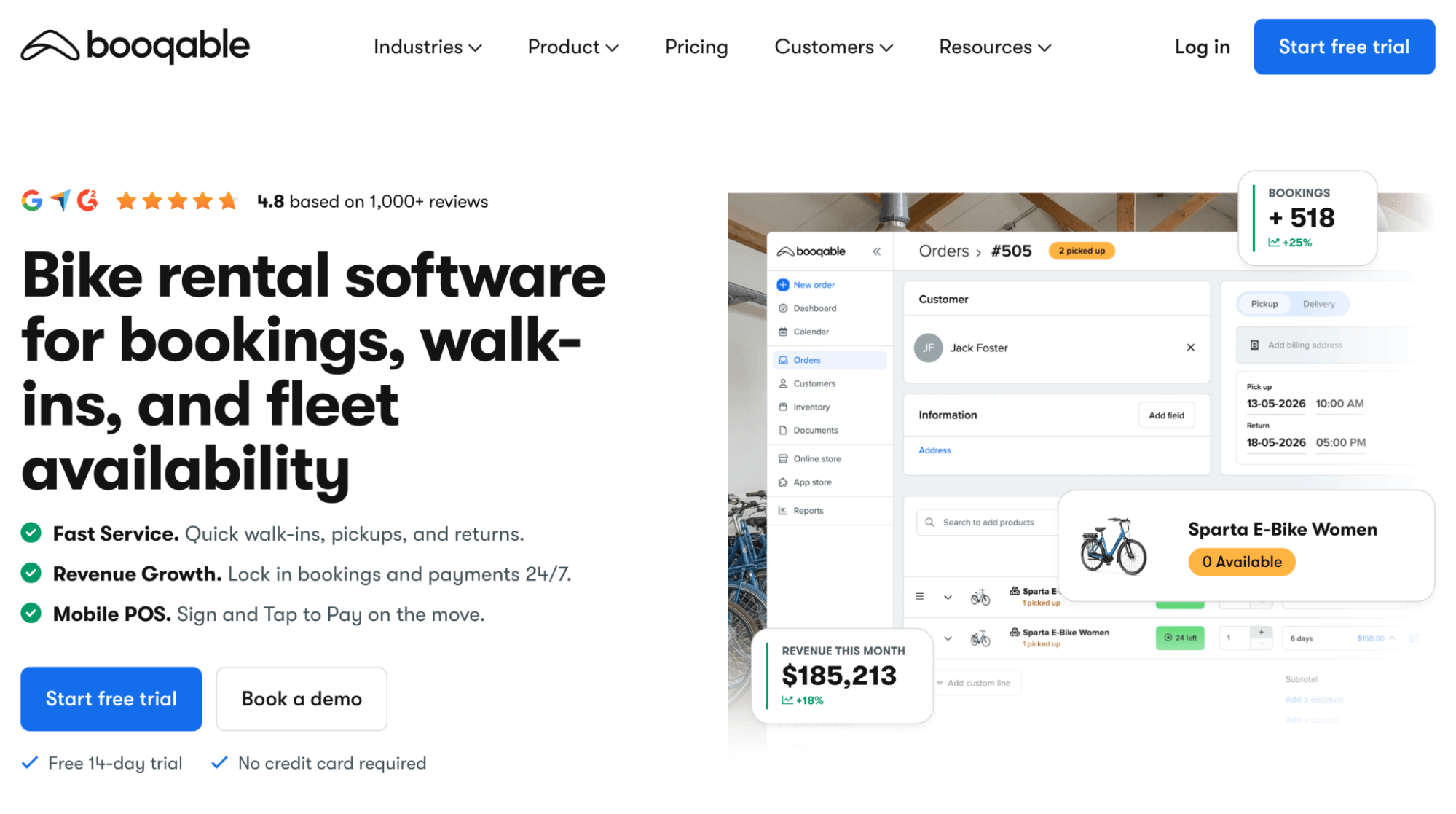
Booqable is a general-purpose rental platform — not built specifically for bikes, but used across a wide range of equipment rental businesses. The appeal is its clean, modern interface and accessible pricing.
This system offers inventory tracking, real-time availability, invoicing, and website integration, all in one place, with fast setup. Reviewers consistently call it intuitive and easy to navigate, making it a nice option for operators who want a straightforward rental management workflow without a steep learning curve.
However, as a more general platform, the gaps show up quickly for bike rental specifically.
There’s no maintenance tracking, mileage or usage monitoring, or bike-level operational tools beyond availability — fleet management past that point is something you’d handle separately.
Several features (product bundles, advanced reporting, promo codes) are gated behind higher-tier plans, and there are no distribution tools like OTA connections.
And users note that support is asynchronous only — there’s no option for live help, which slows things down when you hit a problem mid-peak.
Features
- Website builder with templates
- Online booking engine widgets for WordPress, Shopify, Squarespace
- Central booking calendar with real-time availability
- Inventory management
- Customer management
- Automated invoicing & digital contracts
- e-Signature tools
- Payment processing with deposit support
- POS integrations
- Mobile apps for iOS & Android
- Reporting
Pricing
Booqable offers three plans:
- Start plan ($35/month): Offers essentials like order and inventory management, real-time availability tracking, and invoicing tools. It includes a booking page and basic reporting, and supports online payments and security deposits.
- Grow plan ($87/month): Booqable’s best value plan. It includes everything in Start plus custom website integrations, product bundles, advanced reporting, and more.
- Scale plan ($187/month): For large, multi-location teams and comes with all features plus API access.
Booqable also offers optional add-ons in each plan: the Website Builder ($24/month) and Mobile POS ($12/user/month).
9. yoyo
yoyo is a bike-specific rental management platform built with one goal: make running a bike rental shop as straightforward as possible. The pricing model is the lead draw — yoyo operates on a forever-free plan and charges £1 per booking, passed to the customer, so the platform costs operators nothing. That makes it a natural first look for smaller shops, seasonal operations, or anyone testing the waters with online booking software before committing to a paid system.
The trade-off is depth. yoyo handles the day-to-day well — fleet availability, maintenance records, online booking, multi-venue management — but it isn’t designed for operators trying to grow through new channels. You don’t get distribution tools like OTA connections, and the CRM is limited beyond basic customer history; there are no retargeting tools to entice customers to come back.
For a single-location shop that wants to organise operations without a monthly bill, it’s a fine solution. But for a business actively trying to reach travelers searching on Viator or GetYourGuide, it isn’t the right fit.
Features
- Online booking widget
- Real-time inventory tracking & allocation to prevent double bookings
- Fleet maintenance manager
- Multi-venue management with real-time data across locations
- Unlimited fleet size
- Payment processing via Stripe, PayPal, & regional options (iDEAL, Giropay, Bancontact, EPS, Alipay, P24)
- Reporting
Pricing
yoyo operates on a forever free plan. They charge only £1 per booking and pass that fee on to the customer, so business owners never pay a cent.
10. LendControl
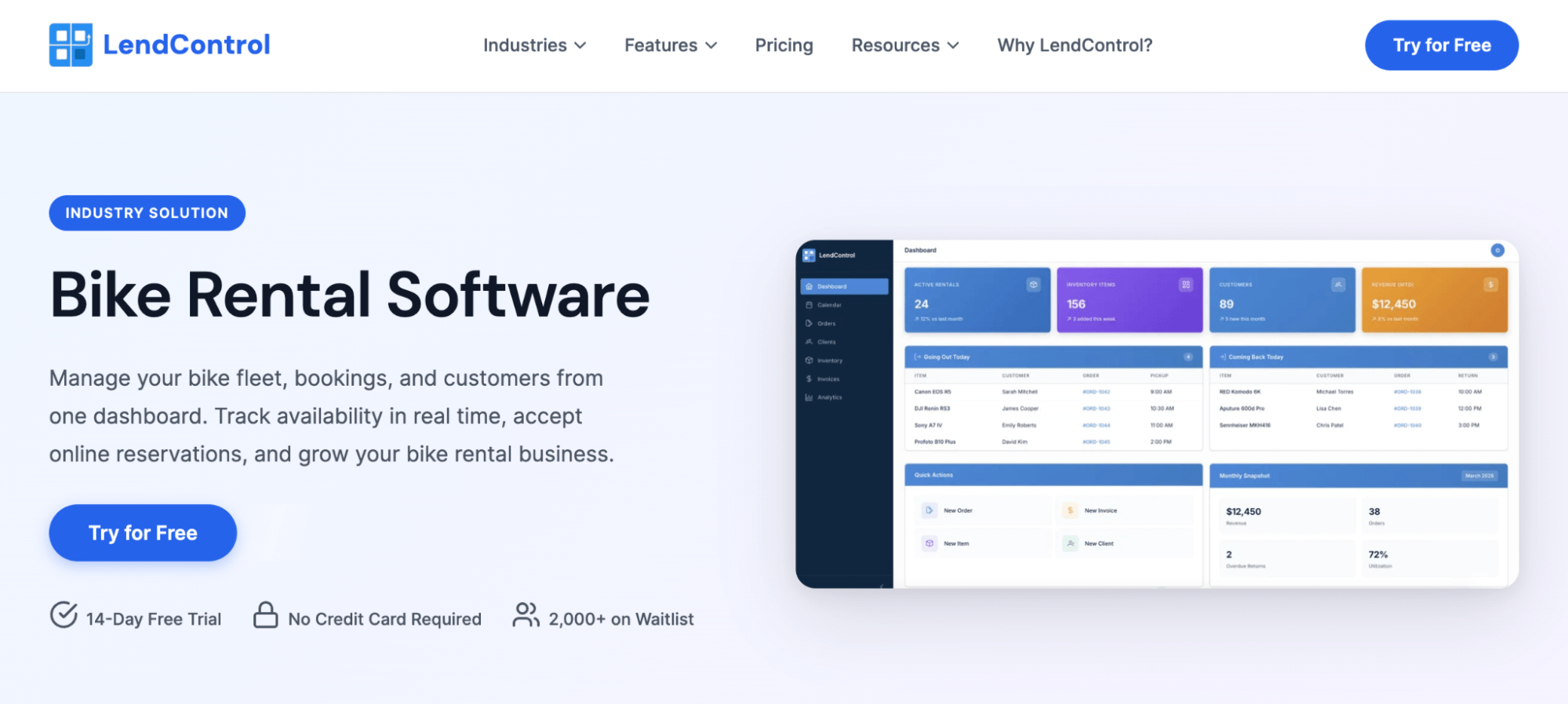
LendControl is the newest platform on this list, and what stands out immediately is its WhatsApp AI availability tool: customers can text your shop directly to ask what’s available, and the system responds instantly from your live inventory. For a bike rental shop that fields a lot of availability inquiries during peak season — tourists asking what bikes are free for a Saturday afternoon — that’s a real time-saver, and not something you’ll find on any other platform in this guide.
Beyond that, LendControl covers the rental management basics cleanly: real-time inventory tracking, order management, payment processing, invoicing, contracts, and a CRM, all from one screen. No booking fees on any plan.
The downsides with a newer platform: no smart pricing automation, OTA connections, or verified third-party reviews to tell you how it holds up in practice. It’s a platform worth evaluating if the WhatsApp angle fits how your customers reach out — just go in knowing it’s still building out its full feature set.
At the time of writing, LendControl doesn’t have any verified third-party reviews.
Features
- Online booking with real-time availability, instant inventory updates on every booking, change, or cancellation
- Real-time inventory tracking — available, reserved, rented, returned status, plus serial numbers, accessories, & condition notes
- Order management — create an order, assign items, collect payment, & generate a rental agreement from one screen
- Payment processing — cash, card, contactless, split payments, with deposits & security holds built in
- Automated invoicing with overdue payment reminders
- Customer CRM — contact details, rental history, invoices, & contracts stored per customer
- Multi-location inventory tracking
- Bulk CSV/Excel import for fleet setup
- WhatsApp AI availability tool — customers text to check what’s free, answered straight from live inventory
- Reporting
Pricing
LendControl offers three plans.
- The Essential plan ($25/month) is for solo operators and small businesses. It includes an online booking page, inventory management, real-time availability tracking, payment collection, quotes, contracts, invoices, and security deposits, customer database, email confirmations and reminders, and basic reporting.
- The Grow plan ($60/month) is for growing teams that need more advanced tools and integrations. This includes everything in Essential plus product bundles, advanced pricing rules, coupons and discounts, custom branding options, user permissions, advanced reporting, priority support, and onboarding.
- The Business plan ($160/month) is for larger operations managing high-volume rental fleets. This builds on the Grow plan with multi-location management, waitlists, activity logs, barcode scanning, white labelling, API, and a dedicated account manager.
Getting started with your best bike rental booking system
Bókun offers the strongest balance of fleet management, day-to-day operations, and tools for reaching new audiences. Track bikes and equipment, prevent double bookings, manage your business from one place, and reach customers beyond your own website.
See what it can do for your bike shop by starting your 14-day free trial.
Related reads: